Showing posts with label technology. Show all posts

Sunday, 5 March 2017

Uber uses 'secret program' Greyball to avoid regulators

Law enforcers acting in countries which oppose the company are ignored or 'tricked' by the app using geolocation data
uber.gif

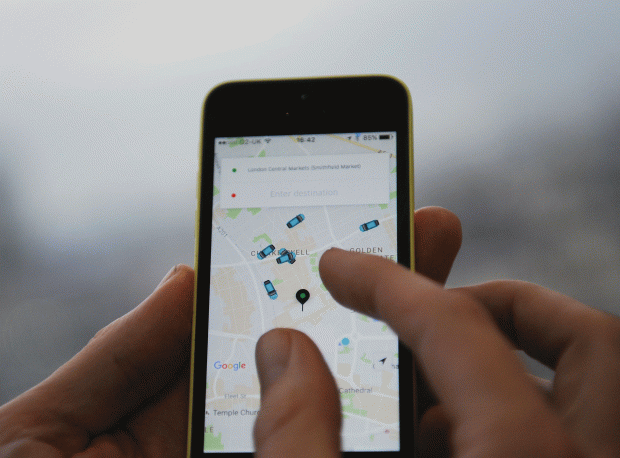
Uber has been using a secret tool in countries across the world in order to avoid law enforcement authorities, it has been revealed.
Greyball, a tool which uses geolocation data, credit card information and social media account data, has been used by the company for years in order to identify and avoid officers aiming to catch drivers out in cities where the discount cab firm is not permitted.
Rides hailed from a location near a city enforcement agent suspected of launching a sting to specifically trap Uber drivers could be ignored or cancelled using the app, The New York Times reported.
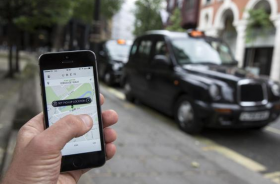
The tool allowed Uber to show law enforcement officers images of “ghost” cars on the app or show that no cars were available for use, the paper said.
Uber defended the programme, adding in a statement that the company “denies ride requests to fraudulent users who are violating our terms of service – whether that’s people aiming to physically harm drivers, competitors looking to disrupt our operations, or opponents who collude with officials on secret ‘stings’ meant to entrap drivers.”
A spokeswoman for Uber confirmed that Greyball was still in use, though on a much smaller scale than it once was.
She added the tool had in fact grown in use as part of efforts to protect the group’s drivers from abuse as well as protect the app from disruption by competitors. In some cases, she said, the tool had been used where there were enforcement stings.
Uber has come under fire as of late, defending accusations of unfair working conditions and allegations of sexual harassment within the company and employee abuse.
Last week investors attacked the company for failing to address its culture of "bullying", "lack of diversity" and "harassment in every form".
On Friday, Uber’s best-known security researcher resigned without stating any reasons why, leading to speculation over whether there had been a link to the Greyball tool.
Rival company Alphabet has also accused Uber of stealing designs for technology for self-driving cars – a claim Uber has denied.
A spokesperson said Uber’s legal department had approved the practice in locations where Uber was not overtly banned, and that Uber's terms of use required riders use the ride hailing app for personal, not commercial, reasons and to not cause “nuisance” to drivers.
The program began under a different name in 2014, and is still being used when drivers are under threat of arrest or other legal punishment in some cities within 15 U.S. states without clear ride-sharing laws, she said, adding that she did not know in which other countries the system is being used.
The New York Times reported that Uber had used the tool to evade authorities in Boston, Paris and Las Vegas, and countries includes Australia, China, Italy and South Korea.
US officials have expressed concern about Uber’s practices but stopped short of saying they will take action.


Friday, 17 February 2017

21 UNDERWATER DISCOVERIES THAT WILL MAKE YOUR JAW DROP!

You won't believe what they found under the sea!

F4U CORSAIR

The submerged World War II plane ran out of fuel, and the quick-thinking pilot changed trajectory and landed in the ocean. According to the story, the pilot was able to free himself from the plane before it sank and survived the crash.

THE LOST CITY OF HERACLEION

For five years, famed archaeologist Frank Goddio embarked on an epic journey in search of the lost Egyptian city. When he was almost ready to give up, he stumbled upon the ruins by accident.

THE GHOST FLEET

Imagine diving and coming across this eerie undersea graveyard. The “Ghost Fleet” is a World War II-era underwater grave with over 40 vehicles bombed near Chuuk Lagoon.

SCULPTURE PARK

The warm Caribbean waters of Cancun, Mexico, offer this unique attraction for divers where they can see over 500 life-like sculptures.

MS ZENOBIA

A 10,000 ton ferry sank to the bottom of the ocean in Larnaca Bay in Cyprus in the 1980’s and rests there still today.

THE UNDERWATER RIVER

Skilled divers can access the “Underwater River,” also known as “Cenote Angelita Cave.” The trees and plants which appear to grow out of the “river,” are actually just an optical illusion caused by a cloud of hydrogen sulfide interacting with the saltwater.

USS ORISKANY

The aircraft carrier saw years of warfare through both the Korean and Vietnam Wars before finally being sunk. It’s now a part of the world’s largest artificial coral reef.

TRAIN GRAVEYARD

n 1985, archaeologists discovered a “train graveyard” off the coast of New Jersey, with locomotives and train cars dating back to the 1850’s. Not surprised New Jersey would waste them…

YONAGUNI MONUMENT

Off the coast of Japan is the Yonaguni Monument, a massive stone structure believed to be over 5,000 years old.

SS PRESIDENT COOLIDGE

The large ship saw its seafaring days end after succumbing to a series of underwater mines.

THE TITANIC

You know the story, so we won’t bore you with details. “We’ll never let go, Jack.” (Note: “Jack” was not a real person. Well, the movie “Jack” anyway.)

“ANCIENT” CHINESE CITY

China’s Qiandao Lake is the home of this “ancient” city, which really isn’t ancient at all since the city was purposely submerged by a construction company.

SS THISTLEGORM

The British merchant ship was sunk in WWII in the Red Sea, and contains everything from vehicles and motorcycles, to ammunition and other weaponry.

MANGANESE BALLS

Taking a break from sunken treasures, these naturally occurring manganese balls have kept scientists stumped for decades. No one quite knows how or why they form, but they can be just millimeters wide to watermelon-sized.

IRISH SILVER

Researchers in Ireland discovered this huge 61 ton haul of World War II-era silver off the coast, nestled in a British cargo ship. Score!

THE ANTIKYTHERA MECHANISM

Discovered in the early 1900’s, the Antikythera Mechanism is an ancient analog “computer” used to predict the movement of the moon and stars, and dates back to somewhere between 100 and 205 BCE.

APOLLO 11 ROCKETS

Once thought lost to the ocean, the rockets were discovered using sonar technology in the Atlantic, led by a team of researchers funded by Amazon founder, Jeff Bezos. Amazing.

SWEEPSTAKES

This Canadian schooner from 1867 sunk in Big Tub Harbour in 1885. It’s only 10 feet underwater, so even novice divers can go searching it’s 100-year-old corridors.

BLACKBEARD’S CANNONS

Nope, it’s not “Pirates of the Caribbean”, or maybe it is. Edward Teach, aka, Blackbeard, sunk the Queen Anne’s Revenge off the coast of North Carolina, along with the millions of pounds of treasures, artifacts, and this cannon weighing over 3,000 lbs.

ANCIENT MEDITERRANEAN SHIPWRECK

For thousands of years, a legend persisted of an ancient merchant vessel that sunk with jewels and pottery in the Mediterranean. Finally, in 2014, divers off the coast of Malta found the ancient Phoenician shipwreck with many of the old pots and golden treasures still intact.

LAKE MICHIGAN STONEHENGE

OK, it’s not the sea, but we had to include Lake Michigan’s “Stonehenge,” this prehistoric rock formation that contains engravings of a mastodon.

5 College Degrees That Will Be Extinct In 20 Years

Do you recollect when cutting edge films would demonstrate a future loaded with robots? All things considered, that future isn't so far away. The robots are coming, and they will take our occupations. The innovative transformation we are in is not halting at any point in the near future, and robotization is an enormous piece of its development. We have seen this change some time recently, and that was the Mechanical Upset. The arrangement was making a more taught workforce to deal with more unpredictable issues, and again our answer for this issue lies in instruction. While picking a higher education, it is vital to be mindful of the changing scene and its evolving requests. Thus I have discovered 5 professional educations that will make certain to be out of date with the appearance of innovation.

Brexit: Access to potentially life-saving clinical trials ‘at risk’ for 600,000 patients


Exclusive: ‘There is a real risk patients will miss out’ due to new EU regulations


More than 600,000 patients a year could be denied access to possibly life-sparing clinical trials after Brexit, restorative research associations have cautioned.

New controls are set to make it fundamentally simpler for medication organizations to test spearheading new medicines in EU nations – starting concerns the UK will be "skirted inside and out" when it leaves the alliance.

Numerous patients, incorporating those with tumor, diabetes and uncommon illnesses, advantage enormously from access to drugs in late phases of testing that are not yet accessible on the NHS.

Yet, Beth Thompson, senior approach consultant at the Wellcome Trust, which stores restorative research, revealed to The Autonomous: "There is a genuine hazard that patients will pass up a major opportunity" when the new EU rules come into operation late one year from now.

"It will turn out to be more confused to run a trial here, with our populace of around 60 million, than it is to go to the entire of the EU, which has a populace of 500 million," she said. "There's a hazard that individuals may sidestep the UK inside and out and simply go to Europe."

The new controls, which the UK drew up, plan to streamline the application procedure for clinical trials through a solitary endorsement framework for every one of the 28 nations.

They will supplant the present framework, which has been reprimanded as moderate and bureaucratic and requires particular and frequently altogether different applications for every part state.

"The hazard is unquestionably there that when the UK leaves the EU, and with it leaves that orchestrated system, that it will diminish the quantity of trials that occur in the UK," said Ms Thompson.

"We don't know yet what the UK's future association with the EU will look like regarding these trials. We'd truly get a kick out of the chance to see the UK trying to orchestrate with the clinical trials control and looking for access to the IT foundation that supports it."

The feelings of trepidation about medications trials take after notices that the presentation of new authorized solutions in the UK could likewise be deferred after Brexit, with tumor sedates liable to be especially severely influenced.

The UK is relied upon to leave the European Pharmaceuticals Office, which directs medications inside the EU, Wellbeing Secretary Jeremy Chase has stated, prompting to concerns England could join the "back of the line" after Japan, the US and the EU when new medications are presented.

Clinical trials can be "essential" for patients with uncommon infections, said Aisling Burnand, leader of the Relationship of Therapeutic Exploration Philanthropies (AMRC). "By the way of uncommon infections, no single nation will have enough individuals with a specific condition to embrace clinical trials of criticalness," she said.

"Including the bigger EU populace not just implies that clinical trials can happen, yet the EU's administrative procedure additionally makes it practical to convey imaginative new treatments to uncommon malady patients."

The mother of a 10-year-old kid with Duchenne strong dystrophy, an existence restricting condition that effects around 2,500 kids in the UK, mostly young men, said her child partaking in a clinical trial had given her "a tremendous measure of trust".

"Young men with Duchenne normally just get seen by a specialist each six to eight months," said Emma Hallam. She has been told this is a result of the degenerative way of the condition.

"They say, 'It's never going to show signs of improvement, so there's no point checking on him all the more regularly, on the grounds that there's never going to uplifting news, it's just going to be awful.' That is not something you need to find out about your tyke."

Be that as it may, partaking in a clinical trial implies her child Alex goes to Newcastle consistently, where "he's seen by first class individuals who comprehend Duchenne and see a considerable measure of young men, so I know Alex is getting the most ideal care". 

Ms Hallam, who has set up a philanthropy called Alex's Desire to raise cash for research into the infection, said Alex was the third kid on the planet to attempt the new medication, and the first in the UK. 

On the off chance that the medication is ended up being powerful, he will have the capacity to continue taking it while it experiences the frequently long endorsement prepare. 

A lessening in the quantity of clinical trials accessible to UK patients would be "heartbreaking" and a "colossal, gigantic disillusionment" for young men like Alex, said Ms Hallam. "Individuals will move to another country to get to clinical trials, since when you have a kid with a condition like Duchenne, you'll do anything for them." 

Be that as it may, the possibility of intense arrangements ahead means colossal vulnerability stays about what leaving the EU will mean for the medications business and clinical trials – which could be inconvenient to ebb and flow inquire about, said Alastair Kent, head of Hereditary Partnership UK. 

"On the off chance that there is vulnerability about the future trial administration post-Brexit, then organizations who have a decision will conceivably support their wagers," he said. "There's an imperative requirement for government to clarify its aims on how it sees these procedures." 

"It's not exactly what Government needs, it's what whatever remains of Europe needs," included Mr Kent. "Positively a portion of the messages leaving the other part states are: 'England can't be believed to be in an ideal situation leaving, as it will empower the others'. 

"While we might need to keep up a blended administration and still have the capacity to play, if whatever is left of Europe says you can't, we're constrained into a disadvantageous position."
A representative for the JDRF, which stores look into new medicines for sort 1 diabetes, additionally said ebb and flow instability could bring about issues in light of the fact that the courses of events required in arranging exploration can be so long. 

Paul Worker, leader of the Establishment of Growth Exploration, stated: "Any administrative obstructions to working cooperatively with associates in the EU would restrict our chances to partake in and lead these trials, which would affect both research and patients. 

"The result of the Brexit arrangements must guarantee the UK stays aggressive in an exceptionally intense condition." 

There were more than 605,000 members in clinical research studies in 2015-16, as per the National Organization for Wellbeing Exploration. 

A Bureau of Wellbeing representative said it was "resolved NHS patients keep on accessing the most bleeding edge medications and treatment", including: "Development will frame some portion of our transactions as we hope to secure the best arrangement for England." 

Ian Hudson, head of UK restorative administrative body the MHRA, said that "as a major aspect of leave transactions we will talk about with the European Union and Part States how best to proceed with participation in the field of clinical trials".

Thursday, 16 February 2017

13 New Cars To Avoid


Today’s new cars just aren’t what they used to be, and we mean that positively. That’s because it’s become increasingly difficult to find a truly and terrifically bad car, truck, or crossover sitting on a dealer’s showroom floor. Gone are the days of monumental mechanical calamities, finger-sized fit-and-finish gaps, uneven trim, and overall shoddy workmanship. While no vehicle is perfect, the average model today performs at a higher level, is safer, offers more amenities, is built better, and is much more durable than at any time in motoring history.
And yet the proverbial cream still rises to the top. Some models lead while other lag with regard to their designs, measurable performance attributes, and the degree to which their buyers are ultimately satisfied. Some are plagued by questionable reliability and/or poor resale values, while others are saddled with dated designs and/or technology. Certainly with the average vehicle selling for $33,871 (according to Kelley Blue Book), astute car buyers should ensure they’re getting the most for their hard-earned money.
To that end we spent considerable time wading deep into assorted data from various sources to put together a baker’s dozen list of cars, crossovers, and SUVs that, while many possess positive qualities, remain also-rans in a highly competitive marketplace.
1-Acura-RLX
Acura RLX
While the midsize RLX luxury sedan is likeable enough, it lags behind the segment leaders in terms of performance, accommodations, and brand cachet. What’s more, its lofty sticker price prevents it from being a bargain-priced alternative. With an overall score of 59 (out of a possible 100) and a reliability rating of minus-68 (out of a possible plus-100), Consumer Reports liked the RLX’s spacious interior and standard safety systems, but felt its ride was choppy and it’s handling ungainly, and overall found it to be a poor value. It scored below average in the JD Power Initial Quality study and is expected to hold onto just 47% of its original value after three years and 30% after five years.
cadillac-ats
Cadillac ATS
Likeable enough in many regards, the compact ATS luxury/sports sedan is neither as sporty as the BMW 3 Series it targets, nor is it as luxurious as the Mercedes-Benz C-Class. With an overall score of 57 and a reliability rating of minus-120, Consumer Reports appreciated the ATS’ driving dynamics and exterior/interior styling, but was less enamored of its gruff and under-powered turbocharged engine, very cramped seat and trunk, difficult entry and exiting, and its confounding controls. It scored below average in all three of the JD Power studies (Initial Quality, Dependability, and Design/Performance), and is expected to hold onto just 43% of its original value after three years and 31% after five years.
Chrysler 200
We had high hopes for the good-looking 200 midsize sedan when it debuted, but it’s ultimately outranked in a crowded and competitive market segment. With an overall score of 51-53 and a reliability rating of minus-46, Consumer Reports liked the 200’s styling, available features, and its optional V6 engine, but found its interior room and design to be lacking, the standard four-cylinder engine to be under-powered and unrefined, and its automatic transmission to be fussy. It scored below average in all three of the JD Power studies (Initial Quality, Dependability, and Design/Performance), and is expected to hold onto just 41% of its original value after three years and 29% after five years.
3-Chrysler-200
Chrysler 200
We had high hopes for the good-looking 200 midsize sedan when it debuted, but it’s ultimately outranked in a crowded and competitive market segment. With an overall score of 51-53 and a reliability rating of minus-46, Consumer Reports liked the 200’s styling, available features, and its optional V6 engine, but found its interior room and design to be lacking, the standard four-cylinder engine to be under-powered and unrefined, and its automatic transmission to be fussy. It scored below average in all three of the JD Power studies (Initial Quality, Dependability, and Design/Performance), and is expected to hold onto just 41% of its original value after three years and 29% after five years.
Chevrolet-Suburban
Chevrolet Suburban
The full-size Suburban SUV is as purposeful a vehicle as there is, built for large families and/or those who require the ability to tow a large boat or trailer. In truth, for this type of vehicle it’s hard to beat. But beware that it’s big and ungainly, and is sheer vehicular overkill in absence of such special needs. With an overall score of 54 and a reliability rating of minus-154, Consumer Reports liked many of the Suburban’s attributes, but found it under-powered, hard to maneuver and park, difficult to load with cargo, and overpriced. It scored below average in all three of the JD Power studies (Initial Quality, Dependability, and Design/Performance), and is expected to hold onto just 47% of its original value after three years and 32% after five years. It’s substantively similar to the GMC Yukon XL, and the somewhat smaller Chevrolet Tahoe and GMC Yukon models, which tend to score somewhat higher.
5-Dodge-Journey
Dodge Journey
The midsize Journey crossover SUV is slated to undergo a complete redesign next year, and it couldn’t come soon enough to cure its inherent ills. With an overall score of 45 and a reliability rating of minus-79, Consumer Reports liked the Journey’s ride quality, quietness, and cabin storage, but otherwise called out its poor handling, unresponsive transmission, fuel economy, rear visibility, tiny third-row seat, and its poor small-overlap frontal crash test rating from the Insurance Institute for Highway Safety (IIHS). It scored below average in the JD Power Dependability study and is expected to hold onto just 38% of its original value after three years and 24% after five years.
Ford-Fiesta
Ford Fiesta
Like many subcompacts, Ford’s smallest car tends to compete with larger late-model used cars on price, and doesn’t necessarily succeed in that regard. With an overall score of 44 and a dismal reliability rating of minus-267, Consumer Reports thought the Fiesta sedan/hatchback felt substantial, with good fuel economy and ride and handling qualities, but found the car to overpriced, with very tight rear seat room, and featured poorly designed controls; it also found the available three-cylinder engine to be lacking. (The sporty ST version fares better, but is costly.) It scored below average in the JD Power Dependability study, and is expected to hold onto just 44% of its original value after three years and 29% after five years.
7-Ford-Focus
Ford Focus
The compact car market is traditionally one of the industry’s most cutthroat segments, and it takes a lot more than the Focus can muster to stand out in a crowded field. With an overall score of 54 and a reliability rating of minus-118, Consumer Reports gave the Focus sedan/hatchback good marks for its ride, handling and fuel economy, but criticized it for its awkward controls, a too-cramped rear seat, and its poor reliability.
8-Dodge-Dart
Dodge Dart
Another compact car that misses the mark, the Dart sedan receives an overall score of 53 and a reliability rating of minus-81 from Consumer Reports. CR liked the Dart’s solid and substantial feel and rear seat room, but found its engine choices to be lackluster, with unimpressive fuel economy and uncomfortable seats. It scored below average in the JD Power Initial Quality and Dependability studies and is expected to hold onto just 42% of its original value after three years and 28% after five years.
Infiniti-q50
Infiniti Q50
Another also-ran within the European-dominated compact luxury sedan segment, Consumer Reports gives the Q50 an overall score of 57 and a reliability rating of minus-64. CR liked the compact Q50 luxury sedan’s acceleration, outward visibility and roomy interior, but criticized its unrefined power-train, fuel economy, ride and handling, controls, and front seat comfort. It scored below average in the JD Power Design/Performance study, and is expected to hold onto just 46% of its original value after three years and 32% after five years.
10-Jeep-Cherokee
Jeep Cherokee
More stylish than the norm among compact crossover SUVs, the Cherokee–unlike most competitors– is able to venture off road when properly (and expensively) equipped. Consumer Reports gives the Cherokee an overall score of 40-47 and a “poor” reliability rating. CR found it to be solid and quiet, and gave high marks to its infotainment system, V6 towing capacity and off-road abilities; however, it criticized the standard four-cylinder engine, nine-speed automatic transmission, entry/exiting, cargo space, front-seat comfort, and forward visibility. It scored below average in the JD Power Initial Quality study and is expected to hold onto just 45% of its original value after three years and 33% after five years.
11-Jeep-Compass
Jeep Compass
Here’s another crossover SUV that’s gone for far too long without a full redesign, and it was never exactly class-leading in the first place. With an overall score of 43 and a “poor” reliability rating, Consumer Reports found little to like about the compact Compass, other than its controls and fuel economy; it received low marks for engine noise, acceleration, seat comfort, rear visibility, cornering, and braking. It scored below average in the JD Power design/performance study and is expected to hold onto just 36% of its original value after three years and 26% after five years.
12-Jeep-Patriot
Jeep Patriot
Mechanically identical to the Jeep Compass, but with a more traditional Jeep-like look, the dated Patriot hardly warrants a salute. With an overall score of 40 and a reliability rating of minus-45, Consumer Reports noted zero “pros,” but had a long list of “cons,” including engine noise, acceleration, driving position, seat comfort, a too-complicated optional radio, and a poor small-overlap frontal crash test score. It scored below average in the JD Power design/performance study and is expected to hold onto just 37% of its original value after three years and 27% after five years.
13-Nissan-Pathfinder
Nissan Pathfinder
Originally a burly truck-based SUV but now a more passive midsize crossover, the Pathfinder falters in what’s become the most competitive market segment. With an overall score of 53 and a reliability rating of minus-126,Consumer Reports liked the Pathfinder’s spacious interior, easy access, and handy second-row seat, but determined it otherwise had no exceptional abilities, with poor acceleration, clumsy handling, and a cheaply finished interior. It scored below average in the JD Power Dependability study and is expected to hold onto just 44% of its original value after three years and 28% after five years.
In case you haven’t noticed, crossover SUVs are on a path to dethrone traditional passenger cars as America’s primary mode of transportation. Sales of four-door sedans are plummeting, while demand for small and midsize crossovers is heading in the opposite direction.
According to Motor Intelligence, crossover sales were up by a healthy 8.0% over the first nine months of 2016, while passenger car deliveries dropped by 8.2%. The genre currently accounts for eight out of the 20 most popular vehicles, with the compact Honda CR-V being the fourth best-selling ride in the U.S. last month, surpassed only by the Ford F-150, Ram 1500, and Chevrolet Silverado full-size pickup trucks.
Thus, in the spirit of “give the public what they want,” we’re highlighting 15 of the best leasing deals on compact and midsize crossover SUVs. Best of all, these are all fresh 2017 models, not clearance deals left over from 2016 in odd colors and/or configurations that might be left lingering in dealers’ lots.

Friday, 10 February 2017

Fact you Naver Kown About Google

Google does what it wants with other companies' data


Google has turned out to be big to the point that, generally, it does what it needs and couldn't care less who knows it. Still, the organization has a couple of unfortunate propensities that it would rather keep under wraps. We should take a gander at some of them now!


Their driverless car project is already re-shaping government policy

In 2012, it was charged that Google workers siphoned deals leads from an ensured database possessed by a Kenyan organization called Mocality, to which they shouldn't have had entry. They then tapped contenders' telephones and utilized the booty data to make offers to contenders' customers. After the embarrassment broke, Google apologized and terminated the workers included.

They don't more often than not react that way. Regularly, Google claims philanthropic purposes behind the freedoms it brings with other organizations' information. For example, its workers once broke into Apple's Safari application utilizing promotion programming, and after that reprimanded Apple for not keeping them from softening up. Censuring the poor security of its rival as a peril to the business, Google undermined to distribute the defective code if Apple didn't settle it ASAP. That resembles getting victimized and finding a note from the thief that says, "You have ninety days to get pick-safe locks and a superior alert framework, or else we'll tell the world precisely how we got in."

Actually, this didn't go over well and Google wound up paying out a pretty much typical $5.5 million to lawful expenses and security bunches — however not to the customers whose protection was broken. They're not critical, clearly.
Finally, the whole world's topography is readily available. With Google Road View and Google Earth, we can encounter all the eminent urban communities, astounding vistas, and dreadful dim back streets of current human development, appropriate from the solace of our PCs and tablets. For instructors, they're apparatuses. For voyagers, they're accommodations. At last, for individuals with travel-influencing physical handicaps, these administrations give the opportunity to investigate our planet voluntarily, a flexibility they may not generally have. That is genuinely great.

In the meantime, these administrations give security advocates the creeps–and not without justifiable reason. At the point when Road View isn't uncovering the formats of finish mystery army installations or flaunting what your own place of residence looks like to potential purchasers and additionally thieves, it's racking up fines for professedly gathering account names (and passwords!) from our private wifi information.

You know those Google autos you may have seen driving around? As per a claim (which Google has lost and can't offer), those autos aren't simply mechanized peepers and GPS information authorities, yet firewall-disregarding information mining mobiles, as well. Such a great amount for secure perusing …
Alleged racial profiling and discriminatory hiring practices

Alleged racial profiling and discriminatory hiring practices


Google's advertisements administrations have checkered pasts, too. There have been different affirmations of racial profiling, particular treatment, and other offensive practices with respect to AdWords and AdSense.

Have you ever Googled a name and been met with an advertisement for a "capture record for [that name you just googled]?" One investigation of AdSense discovered "measurably huge separation in [arrest record-related] promotion conveyance in light of ventures of 2,184 racially related individual names crosswise over two sites." In the event that you google your name — simply your name — you will probably observe advertisements for capture records administrations, safeguard bonds administrations, lawful guidance, and criminal resistance lawyers, if your name doesn't "sound white."

The issue reaches out past rowdiness among promotion calculations. Concealed inclinations in Google's contracting rehearses have been very much reported, for example, an inclination for contender to be under forty that brought about a legal claim. The organization lost that suit. Google: an equivalent open door business for individuals under forty, competitors with high resilience for racial profiling favored.


Lady Day, and other half-measures towards equality


A (nearly) incredible organization for ladies, racial/ethnic minorities, and LGBTQ Silicon Valley representatives, Google prides itself on inclusivity and equity. All things being equal, the organization's endeavors to connect with ladies haven't generally been effective.

Consider Google's Woman Day, reported in June of 2016. In light of a shareholder's sexist violation of social norms at the 2015 Yearly Shareholders' Supper (he alluded to the organization's CFO as "the woman CFO"), Google representatives of all sexual orientations selected to include the modifier "Woman" to their titles. A sparkling review in Fortune pronounces, "The Google people group has completely grasped the thought. Presently, more than 800 Google representatives — both men and ladies — have changed their titles in the expansive index or in their email marks." That is awesome aside from, when Woman Day was declared, Google had more than 60,000 workers on finance, all with titles in the organization registry and, probably, email bylines, as well. This was minimal more than a happy dissent of a difficult issue in the tech business: far reaching misogyny and male haughtiness.

As far as advance, Woman Day is surely superior to nothing, however it's in no way, shape or form progressive. For Woman Day to be significant, the current systemic structure must be re-assessed and changed as needs be. Without systemic changes, Woman Day just strengthens a false sexual orientation division and effectively overlooks non-acclimating and genderqueer characters in the tech business.

Google has your data, doesn't need to spy on you, but does anyway


 Google never forgets. In 2015, Nate Silver's FiveThirtyEight site explored Google's perfect memory in the context of an ongoing debate over "the right to be forgotten" — the idea that search engines should allow people to opt out of query results. At the time, a petition signed by 280,000 people was gaining popularity and, much to FiveThirtyEight's surprise, the majority of requests to have their internet histories scrubbed after they die were coming from ordinary people, not politicians or convicted criminals.

Idealism at its most obstinate, "the right to be forgotten" presents logistical problems for implementation, as it highlights an uncomfortable truth about the unparalleled access that Google has. Those ever-growing piles of dirt it has on just about all of us are permanent. It's a good thing that Google would never cooperate with a foreign or domestic campaign of repression just because there was money to be made.

Except all those times they have, of course. Remember that big kerfuffle with that delightful Edward Snowden fellow? In 2013, The Guardian published Snowden's revelations about how Google –and virtually everybody else in Silicon Valley–had cooperated, to a certain extent, with the NSA's PRISM domestic espionage program. To make matters worse, Google's uneasy partnership with the Chinese government has resulted in Google China removing any mention of the 1989 Tiananmen Square massacre. Whatever happened to the free exchange of ideas?


Google loves Net Neutrality, doesn't uphold its principles


To understand Google's complex connection to net neutrality, we must begin with the "series of tubes" meme. It originated in 2006, when then-Senator Ted Stevens described the internet as "not a big truck [but rather] a series of tubes." It was, perhaps, a poor choice of words. For proponents of net neutrality — the idea that Internet Service Providers shouldn't be allowed to interfere with site traffic — it was a moment of accidental transparency and a wake-up call, as if to say, "This is the ignorance we're up against."

Senator Stevens wanted to let ISPs charge sites like Google for bandwidth use, to prevent the tubes from getting clogged with data. (It's not supposed to make sense. It's only supposed to be made law and enforced by people who don't understand networking.) Naturally, Google became a vocal defender of net neutrality — until it got into the ISP game with Google Fiber. Users who tried to set up servers in their homes would be in violation of its TOS, which was modeled on the industry standard it used to oppose.

In recent years, perhaps on account of its changing interests, Google and a few other tech behemoths have avoided discussing the issue altogether. That's a very untubular way to do business.


Google isn't a flat organization, no matter what it insists

 Although you'd never know it by looking at his company's actual practices, Amazon CEO Jeff Bezos believes that the most effective teams should be small enough to feed with two pizzas. Google has claimed to subscribe to the theory, too — in the very beginning, it seems that Brin and Page's company practiced what they preached. At present, though, Google is just too big and cumbersome to comply with Bezos' Two-Pizza rule. Even if it was two of those humongous, table-sized pizzas you get for free if you can eat it all in one sitting.

Google is a massive corporation that pretends to still be the fun, burgeoning startup it once was. In their book How Google Works, execs Eric Schmidt and Jonathan Rosenberg dub it a flat organization made up of small, specialized teams. Technically, it's not actually flat. Yes, in 2002, Larry Page and Sergey Brin wanted to abolish managers, and so they did for a few months. But then, Page got fed up with the questions and the chaos. With no middle managers, Google employees went to him anytime they had an issue — with anything. Quibble with a coworker? Better talk to Page. Need help with that expense report? No working pens? Get the boss of the entire company on the horn.

It got to be too much, so the bosses quietly brought back hierarchy while maintaining the same "flat organization" brand, a longtime symbol of the company's one-time commitment to doing things differently. Except, as the company diversifies its investments and acquires more of its competitors, the organizational flatness on which it prides itself is disappearing, and fast.


It's too big for its own good … and ours


Google's employees-only meme database, designed to give workers a way of blowing off steam, isn't just a great place to find scathing memes about the company's controversial acquisition of Nest. It's also packed with memes about how cool working there used to be. The game-changing, rebellious startup has become the Establishment.

At its present size, Google cannot be kept in check by government oversight. Its irreducible complexity presents a logistical nightmare for industry regulators. The people upon whom we rely to levy the appropriate warnings, penalties, and fines to ensure that Google, and companies like it, operate within the confines of the law lack the resources to do the job. Threats don't mean anything if you can't back it up.

Its full scope is literally unimaginable
 
 There are aspects of Google, both good and bad, that this article hasn't covered because the company is simply too big, and too complicated to comprehend. That's not a copout — it's science. Evolution hasn't prepared us to reckon with something as massive as Google. Faced with uncommonly large quantities, our sense of scale breaks down, and our estimations become wildly inaccurate.

Sure, we can represent Google's $82.5 billion empire with digits, charts, and language. We can list its holdings, track the cash-flow, and catalog its projects; but how it actually works, and how far it can ultimately reach, is beyond our mere mortal comprehension. Ironically, we likely can never know How Google Works, and Google likes it that way.

Best web hoster

ADS

Best web hoster