Showing posts with label technology News. Show all posts

Sunday, 5 March 2017

Uber uses 'secret program' Greyball to avoid regulators

Law enforcers acting in countries which oppose the company are ignored or 'tricked' by the app using geolocation data
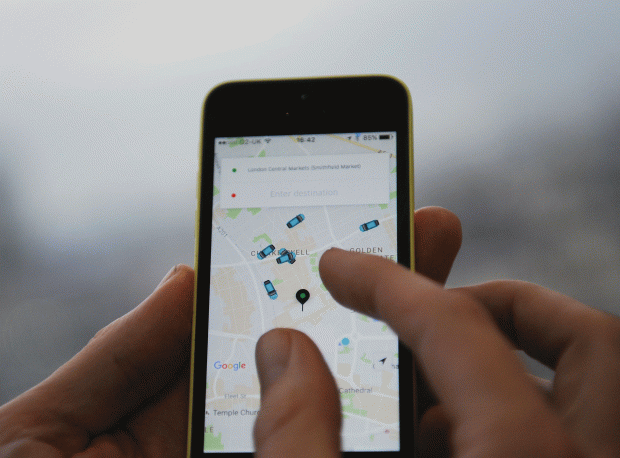
uber.gif

Uber has been using a secret tool in countries across the world in order to avoid law enforcement authorities, it has been revealed.
Greyball, a tool which uses geolocation data, credit card information and social media account data, has been used by the company for years in order to identify and avoid officers aiming to catch drivers out in cities where the discount cab firm is not permitted.
Rides hailed from a location near a city enforcement agent suspected of launching a sting to specifically trap Uber drivers could be ignored or cancelled using the app, The New York Times reported.
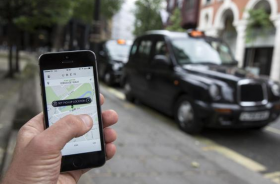
The tool allowed Uber to show law enforcement officers images of “ghost” cars on the app or show that no cars were available for use, the paper said.
Uber defended the programme, adding in a statement that the company “denies ride requests to fraudulent users who are violating our terms of service – whether that’s people aiming to physically harm drivers, competitors looking to disrupt our operations, or opponents who collude with officials on secret ‘stings’ meant to entrap drivers.”
A spokeswoman for Uber confirmed that Greyball was still in use, though on a much smaller scale than it once was.
She added the tool had in fact grown in use as part of efforts to protect the group’s drivers from abuse as well as protect the app from disruption by competitors. In some cases, she said, the tool had been used where there were enforcement stings.
Uber has come under fire as of late, defending accusations of unfair working conditions and allegations of sexual harassment within the company and employee abuse.
Last week investors attacked the company for failing to address its culture of "bullying", "lack of diversity" and "harassment in every form".
On Friday, Uber’s best-known security researcher resigned without stating any reasons why, leading to speculation over whether there had been a link to the Greyball tool.
Rival company Alphabet has also accused Uber of stealing designs for technology for self-driving cars – a claim Uber has denied.
A spokesperson said Uber’s legal department had approved the practice in locations where Uber was not overtly banned, and that Uber's terms of use required riders use the ride hailing app for personal, not commercial, reasons and to not cause “nuisance” to drivers.
The program began under a different name in 2014, and is still being used when drivers are under threat of arrest or other legal punishment in some cities within 15 U.S. states without clear ride-sharing laws, she said, adding that she did not know in which other countries the system is being used.
The New York Times reported that Uber had used the tool to evade authorities in Boston, Paris and Las Vegas, and countries includes Australia, China, Italy and South Korea.
US officials have expressed concern about Uber’s practices but stopped short of saying they will take action.



Saturday, 4 March 2017

Police hunting for a convicted murderer who escaped custody in Liverpool arrest four in Dorset

shaun-walmsley.jpg
Shaun Walmsley has been on the run since 21 February Merseyside Police
Shaun Walmsley is currently on the run after two armed men overpowered his guards during a hospital visit in Liverpool last month


Police hunting for a convicted murder on the loose in Liverpool have arrested four people in Dorset.
Armed officers arrested the four men during a swoop on a car in the Canford Cliffs area of Poole on Friday at around 3:45pm but Shaun Walmsley was not among them.
Eyewitnesses told the BBC they heard loud bangs and saw pink smoke as police cars blocked the Vauxhall Corsa’s escape in Haven Road.
During the planned operation, officers fired tyre deflation rounds to stop the vehicle and arrested the four men.
No-one was injured and no other weapons were discharged.
Walmsley, 28, went on the run on 21 February after two men armed with a knife and a gun confronted prison officers guarding him at Aintree University Hospital during a visit from HMP Wilton.
He then fled the scene in a gold Volvo which was later found abandoned in the Fazakerley area of Liverpool.
Two men aged 24 and two aged 25, all from the Liverpool area, are being questioned on suspicion of assisting an offender.
Detective Chief Inspector Gavin Dudfield, of Dorset Police, said: "Dorset Police responded to reports that a number of people involved in the unlawful escape of Shaun Walmsley were travelling through Dorset.
"This was a successful targeted operation and I would like to thank all the officers involved, including our alliance colleagues at Devon and Cornwall Police as well as Merseyside Police.
"I appreciate that due to the nature of the incident there may have been some concerns in the local community, so I would like to thank the public for their patience and understanding while these necessary arrests were made."
Walmsley is currently serving a life sentence with a minimum term of 30 years for the murder of Anthony Duffy in May 2014.
Mr Duffy, 33, was lured to an address in Aintree and stabbed 28 times by Walmsley and another man after they learnt he had planned to steal their cannabis crop, the Liverpool Echo reported.
Merseyside Police are said to be working with forces overseas as part of their search for the killer.
Two men aged 25 and 27 and a 26-year-old woman, all from Norris Green, Liverpool, had previously been arrested over the escape and they were later released pending further inquiries.
Additional reporting by PA

App lets people easily take photos with any dead person they like and bring them 'back to life'

All ELROIS needs is a 3D scan of a person's face
selfie.jpg
A television reporter takes a selfie in front of the pool and cabana during a tour of the former home of Al Capone on March 18, 2015 in Miami Beach, Florida


A new app promises to let people take selfies with anyone they like – including dead people or celebrities.
ELROIS, a South Korean company, only needs a 3D scan of any person's face for its "With Me" app. Once it has one, it can 'resurrect' that person – allowing them to react to what you say and move around, as well as letting you take pictures with them.
The app has been explicitly created to allow people to recreate the image and personality of someone who has passed away, according to its creators. They said that it is a way of overcoming a broken heart by interacting with a virtual recreation of their deceased loved ones.
It does that by creating what it calls avatars of people. Those are really 3D models that are animated and use technologies to respond to conversation and move around.
The company is apparently happy to let users create avatars of people that haven't necessarily given permission. “Avatars could be your family, friends, or even celebrities!” its tagline reads.
https://static.independent.co.uk/s3fs-public/styles/readmore_card/public/thumbnails/image/2017/03/02/11/machina-alicia-vikander.jpgAnd they can then be used to do strange things. If you say "I love you" to the virtual character, for instance, it will reply back to say the same thing. It will also copy its users' movements.
It will even scan the face of a user, and look to see if they look different or if their emotional state has changed. That way, it will be able to tell if someone looks more sad than usual and attempt to comfort them, its creators claim

Friday, 10 February 2017

Fact you Naver Kown About Google

Google does what it wants with other companies' data


Google has turned out to be big to the point that, generally, it does what it needs and couldn't care less who knows it. Still, the organization has a couple of unfortunate propensities that it would rather keep under wraps. We should take a gander at some of them now!


Their driverless car project is already re-shaping government policy

In 2012, it was charged that Google workers siphoned deals leads from an ensured database possessed by a Kenyan organization called Mocality, to which they shouldn't have had entry. They then tapped contenders' telephones and utilized the booty data to make offers to contenders' customers. After the embarrassment broke, Google apologized and terminated the workers included.

They don't more often than not react that way. Regularly, Google claims philanthropic purposes behind the freedoms it brings with other organizations' information. For example, its workers once broke into Apple's Safari application utilizing promotion programming, and after that reprimanded Apple for not keeping them from softening up. Censuring the poor security of its rival as a peril to the business, Google undermined to distribute the defective code if Apple didn't settle it ASAP. That resembles getting victimized and finding a note from the thief that says, "You have ninety days to get pick-safe locks and a superior alert framework, or else we'll tell the world precisely how we got in."

Actually, this didn't go over well and Google wound up paying out a pretty much typical $5.5 million to lawful expenses and security bunches — however not to the customers whose protection was broken. They're not critical, clearly.
Finally, the whole world's topography is readily available. With Google Road View and Google Earth, we can encounter all the eminent urban communities, astounding vistas, and dreadful dim back streets of current human development, appropriate from the solace of our PCs and tablets. For instructors, they're apparatuses. For voyagers, they're accommodations. At last, for individuals with travel-influencing physical handicaps, these administrations give the opportunity to investigate our planet voluntarily, a flexibility they may not generally have. That is genuinely great.

In the meantime, these administrations give security advocates the creeps–and not without justifiable reason. At the point when Road View isn't uncovering the formats of finish mystery army installations or flaunting what your own place of residence looks like to potential purchasers and additionally thieves, it's racking up fines for professedly gathering account names (and passwords!) from our private wifi information.

You know those Google autos you may have seen driving around? As per a claim (which Google has lost and can't offer), those autos aren't simply mechanized peepers and GPS information authorities, yet firewall-disregarding information mining mobiles, as well. Such a great amount for secure perusing …
Alleged racial profiling and discriminatory hiring practices

Alleged racial profiling and discriminatory hiring practices


Google's advertisements administrations have checkered pasts, too. There have been different affirmations of racial profiling, particular treatment, and other offensive practices with respect to AdWords and AdSense.

Have you ever Googled a name and been met with an advertisement for a "capture record for [that name you just googled]?" One investigation of AdSense discovered "measurably huge separation in [arrest record-related] promotion conveyance in light of ventures of 2,184 racially related individual names crosswise over two sites." In the event that you google your name — simply your name — you will probably observe advertisements for capture records administrations, safeguard bonds administrations, lawful guidance, and criminal resistance lawyers, if your name doesn't "sound white."

The issue reaches out past rowdiness among promotion calculations. Concealed inclinations in Google's contracting rehearses have been very much reported, for example, an inclination for contender to be under forty that brought about a legal claim. The organization lost that suit. Google: an equivalent open door business for individuals under forty, competitors with high resilience for racial profiling favored.


Lady Day, and other half-measures towards equality


A (nearly) incredible organization for ladies, racial/ethnic minorities, and LGBTQ Silicon Valley representatives, Google prides itself on inclusivity and equity. All things being equal, the organization's endeavors to connect with ladies haven't generally been effective.

Consider Google's Woman Day, reported in June of 2016. In light of a shareholder's sexist violation of social norms at the 2015 Yearly Shareholders' Supper (he alluded to the organization's CFO as "the woman CFO"), Google representatives of all sexual orientations selected to include the modifier "Woman" to their titles. A sparkling review in Fortune pronounces, "The Google people group has completely grasped the thought. Presently, more than 800 Google representatives — both men and ladies — have changed their titles in the expansive index or in their email marks." That is awesome aside from, when Woman Day was declared, Google had more than 60,000 workers on finance, all with titles in the organization registry and, probably, email bylines, as well. This was minimal more than a happy dissent of a difficult issue in the tech business: far reaching misogyny and male haughtiness.

As far as advance, Woman Day is surely superior to nothing, however it's in no way, shape or form progressive. For Woman Day to be significant, the current systemic structure must be re-assessed and changed as needs be. Without systemic changes, Woman Day just strengthens a false sexual orientation division and effectively overlooks non-acclimating and genderqueer characters in the tech business.

Google has your data, doesn't need to spy on you, but does anyway


 Google never forgets. In 2015, Nate Silver's FiveThirtyEight site explored Google's perfect memory in the context of an ongoing debate over "the right to be forgotten" — the idea that search engines should allow people to opt out of query results. At the time, a petition signed by 280,000 people was gaining popularity and, much to FiveThirtyEight's surprise, the majority of requests to have their internet histories scrubbed after they die were coming from ordinary people, not politicians or convicted criminals.

Idealism at its most obstinate, "the right to be forgotten" presents logistical problems for implementation, as it highlights an uncomfortable truth about the unparalleled access that Google has. Those ever-growing piles of dirt it has on just about all of us are permanent. It's a good thing that Google would never cooperate with a foreign or domestic campaign of repression just because there was money to be made.

Except all those times they have, of course. Remember that big kerfuffle with that delightful Edward Snowden fellow? In 2013, The Guardian published Snowden's revelations about how Google –and virtually everybody else in Silicon Valley–had cooperated, to a certain extent, with the NSA's PRISM domestic espionage program. To make matters worse, Google's uneasy partnership with the Chinese government has resulted in Google China removing any mention of the 1989 Tiananmen Square massacre. Whatever happened to the free exchange of ideas?


Google loves Net Neutrality, doesn't uphold its principles


To understand Google's complex connection to net neutrality, we must begin with the "series of tubes" meme. It originated in 2006, when then-Senator Ted Stevens described the internet as "not a big truck [but rather] a series of tubes." It was, perhaps, a poor choice of words. For proponents of net neutrality — the idea that Internet Service Providers shouldn't be allowed to interfere with site traffic — it was a moment of accidental transparency and a wake-up call, as if to say, "This is the ignorance we're up against."

Senator Stevens wanted to let ISPs charge sites like Google for bandwidth use, to prevent the tubes from getting clogged with data. (It's not supposed to make sense. It's only supposed to be made law and enforced by people who don't understand networking.) Naturally, Google became a vocal defender of net neutrality — until it got into the ISP game with Google Fiber. Users who tried to set up servers in their homes would be in violation of its TOS, which was modeled on the industry standard it used to oppose.

In recent years, perhaps on account of its changing interests, Google and a few other tech behemoths have avoided discussing the issue altogether. That's a very untubular way to do business.


Google isn't a flat organization, no matter what it insists

 Although you'd never know it by looking at his company's actual practices, Amazon CEO Jeff Bezos believes that the most effective teams should be small enough to feed with two pizzas. Google has claimed to subscribe to the theory, too — in the very beginning, it seems that Brin and Page's company practiced what they preached. At present, though, Google is just too big and cumbersome to comply with Bezos' Two-Pizza rule. Even if it was two of those humongous, table-sized pizzas you get for free if you can eat it all in one sitting.

Google is a massive corporation that pretends to still be the fun, burgeoning startup it once was. In their book How Google Works, execs Eric Schmidt and Jonathan Rosenberg dub it a flat organization made up of small, specialized teams. Technically, it's not actually flat. Yes, in 2002, Larry Page and Sergey Brin wanted to abolish managers, and so they did for a few months. But then, Page got fed up with the questions and the chaos. With no middle managers, Google employees went to him anytime they had an issue — with anything. Quibble with a coworker? Better talk to Page. Need help with that expense report? No working pens? Get the boss of the entire company on the horn.

It got to be too much, so the bosses quietly brought back hierarchy while maintaining the same "flat organization" brand, a longtime symbol of the company's one-time commitment to doing things differently. Except, as the company diversifies its investments and acquires more of its competitors, the organizational flatness on which it prides itself is disappearing, and fast.


It's too big for its own good … and ours


Google's employees-only meme database, designed to give workers a way of blowing off steam, isn't just a great place to find scathing memes about the company's controversial acquisition of Nest. It's also packed with memes about how cool working there used to be. The game-changing, rebellious startup has become the Establishment.

At its present size, Google cannot be kept in check by government oversight. Its irreducible complexity presents a logistical nightmare for industry regulators. The people upon whom we rely to levy the appropriate warnings, penalties, and fines to ensure that Google, and companies like it, operate within the confines of the law lack the resources to do the job. Threats don't mean anything if you can't back it up.

Its full scope is literally unimaginable
 
 There are aspects of Google, both good and bad, that this article hasn't covered because the company is simply too big, and too complicated to comprehend. That's not a copout — it's science. Evolution hasn't prepared us to reckon with something as massive as Google. Faced with uncommonly large quantities, our sense of scale breaks down, and our estimations become wildly inaccurate.

Sure, we can represent Google's $82.5 billion empire with digits, charts, and language. We can list its holdings, track the cash-flow, and catalog its projects; but how it actually works, and how far it can ultimately reach, is beyond our mere mortal comprehension. Ironically, we likely can never know How Google Works, and Google likes it that way.

Sony’s new DRAM-enhanced image sensor is a game changer for smartphone photography


As though the producers of independent cameras don't have enough issues holding off cell phones, Sony has recently declared a sensor that can possibly be yet another distinct advantage for what's conceivable in cell phone photography. Its new plan includes a layer of Measure between the pixel layer and the circuit layer. That permits it to catch and readout pictures a few circumstances speedier than current outlines.

Sony reported the new chip engineering at ISSCC this week, as the most recent in its long line of advancements in sensor plan. The expansion of on-board Measure will help understand no less than three noteworthy issues with current cell phone cameras: moving shade ancient rarities, moderate movement recordings, and multi-picture clamor decrease antiquities. We'll take a gander at each thusly.

A great band-aid for rolling shutter headach

One issue with ease imagers, similar to those utilized as a part of cell phones, is that they don't have a mechanical shade. Their pictures are perused out one piece at any given moment while the sensor is still effectively recording information (called a moving shade). That implies that articles moving at fast seem contorted, similar to the train in this illustrative case from Sony:
On the left, the commonplace 1/30s readout time spreads the profile of the moving train. On the privilege, while still in fact a moving shade, the new chip's 1/120s readout time significantly lessens the potential for mutilation.
While the extra Measure layer looks entirely straightforward in this square graph, it changes the material science of the chip, and presents extra open door for electrical clamor. Up until this point, the chip isn't underway, so it isn't conceivable to benchmark its true execution. Be that as it may, Sony claims it has possessed the capacity to tackle the new clamor issues.

Support for super-slow-motion video and special effects


The Measure additionally permits the sensor to catch 1000fps video at 1080p HD determination. This makes for some extremely amazing super-moderate movement potential. By blending high-outline rate video with standard casing rate the chip likewise makes it conceivable to do some cool enhancements appropriate in a cell phone, as should be obvious in this Sony illustration video:

Expect record-setting image quality results from this sensor


More subtle, yet maybe above all, the 30fps readout of full-determination 19.3MP pictures is ideal for the advanced multi-picture commotion lessening that is progressively normal in top of the line cell phones. For instance, Google's HDR+ quietly joins in the vicinity of 3 and 9 casings to make a solitary higher-dynamic-run, bring down commotion, last yield picture. That procedure can present antiquities if questions in the scene, or the camera, are moving. By having the casings caught and read out more rapidly, those antiques can be further lessened.


Best web hoster

ADS

Best web hoster